 Startup Stories
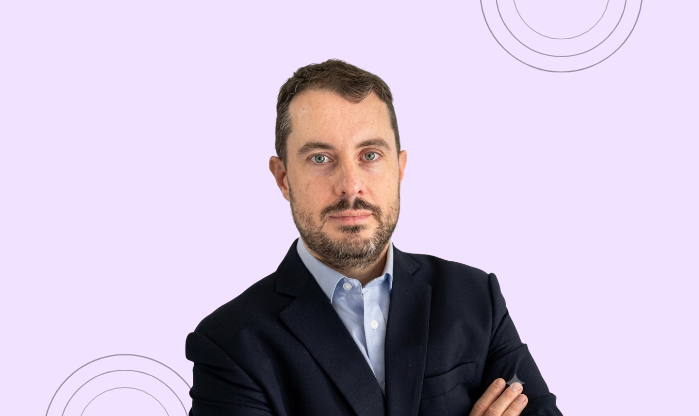
Maneesh D., Founder and CTO of Superclaims, is working to address one of the persistent challenges in India’s healthcare ecosystem: delays and complexity in health insurance claims processing. Recognising how fragmented reviews and manual assessments can hold up claim decisions, he co-founded Superclaims to rethink the process through artificial intelligence. The platform uses more than 65 specialised AI agents to assess claims, validate documentation and support payment integrity.
In this conversation, Maneesh discusses the problem that inspired Superclaims, the role of AI in claims adjudication, the lessons from processing claims at scale, and his vision for the future of health insurance in India.
Interview Questions
• What was the initial problem or experience that led Maneesh and you to start Superclaims?
The starting point for Superclaims was a problem we observed in the health insurance claims process. A patient could be medically ready for discharge, yet the discharge itself could be delayed because the insurance claim was still being processed. Even in cashless cases, the approval process could take one to three hours, sometimes longer.
When we looked under the hood, we saw that multiple teams were reviewing different parts of the same claim, often sequentially. It was like having several people check the same document, one after another, when many of those checks could happen simultaneously.
That became the starting point for Superclaims. We wanted to rethink the process using AI, so that a patient's access to financial certainty wasn't held up by administrative complexity
• Coming from outside the insurance industry, how did you validate the opportunity and understand the complexities of claims processing?
We started by asking questions, not building technology. We spoke to people in the insurance industry to understand where the delays originated and whether the problem was systemic.
What we learnt was that a health insurance claim is much more than a bill being checked against a policy. It involves clinical judgement, policy interpretation, financial validation and documentation, all of which need to work together.
Think of it as solving several interconnected puzzles at once. Understanding those dependencies helped us design a system around the actual claims workflow, rather than simply adding AI to an existing process.
• You spent 100 days evaluating your compatibility as co-founders. What were you trying to establish during that period, and how has it shaped your partnership?
Building a startup is a long-term commitment, and sharing an idea is very different from sharing responsibility for making it work.
The important questions are how you handle disagreements, make decisions under uncertainty and respond when things don't go according to plan. In the early stages, those situations are inevitable.
We were both young founders without prior experience in the insurance industry, so we knew we had a steep learning curve ahead of us. The 100 days gave us an opportunity to understand how we think, approach problems and make decisions together. We may not have had years of industry experience, but we shared the willingness to learn, challenge each other and build from first principles. That has shaped our partnership and how we approach building Superclaims.
• What happens behind the scenes when Superclaims processes a health insurance claim, and which parts of the workflow are handled by AI?
Think of a health insurance claim as a file that needs to pass several checks: Is the patient eligible? Is the treatment supported by the medical documentation? Are the expenses covered under the policy? Are there any inconsistencies?
Traditionally, these checks can move between different teams, creating delays. Superclaims uses more than 65 specialised AI agents to evaluate different aspects of the claim, from document completeness and policy eligibility to medical adjudication and payment integrity.
The key difference is orchestration. Instead of treating every check as a separate stop in a long queue, our system coordinates multiple assessments in parallel and generates structured, traceable outputs.
Our aim is to bring claim processing down from hours to few minutes, while making the underlying decisions more consistent and auditable.
• Superclaims has reportedly processed nearly 1 million claims. What patterns or insights have emerged from working with claims at this scale?
At this scale, the biggest insight is that claims complexity sits between documents. The bill tells you what was charged, the discharge summary provides clinical context, and the policy and hospital tariff determine what is payable. Extracting each correctly is only the beginning; the challenge is reconciling them.
Seemingly simple checks have surprising nuances. A repeated charge could be a legitimate repeat dose or the same expense appearing across multiple documents. A quantity of ‘three’ could mean tablets, strips, doses or days. A separately billed item may already be included in a negotiated package. Automation needs to understand those relationships before flagging an error.
We have also learned to distinguish missing evidence from an invalid charge, and an unusual bill from proven fraud. Human corrections are equally nuanced: they may reflect an extraction mistake, a policy interpretation or clinical judgment. Understanding that distinction helps us improve the right part of the system, and give reviewers findings they can trace back to the evidence and applicable rule.
• How do you measure the impact of Superclaims beyond faster approvals, particularly for patients, hospitals, insurers, and TPAs?
Speed is the most visible outcome, but it isn't the only one.
For patients, a faster claim decision can mean less uncertainty during an already stressful hospital stay. For hospitals, it can help reduce delays linked to claim settlement. For insurers and TPAs, the benefits include lower operational costs, greater processing capacity and better payment integrity.
Our platform is designed to reduce claims processing costs by up to 70%. We also focus on making decisions easier to understand: what was flagged, which policy condition applies and why a particular expense needs further review.
To us, the real measure of impact is whether the entire process becomes more efficient and transparent, rather than simply whether one step gets faster.
• What has been the biggest challenge in building trust around AI within an industry where decisions can have a direct financial and personal impact on customers?
In health insurance, a decision cannot be a black box. If a claim is flagged or an expense is questioned, the insurer needs to understand why. That is where building AI for insurance differs from building a general-purpose AI tool. The technology has to do more than produce an answer. It must follow the relevant rules, provide traceable reasoning and support review.
We have approached this by building specialised agents for different parts of the adjudication process, with structured validations and audit trails. We also believe human judgement remains important for complex or exceptional cases.
Our philosophy is simple: automation should make decisions more consistent and easier to examine, not make accountability disappear.
• What do you want the health insurance claims experience in India to look like five years from now, and what role does Superclaims aim to play in that transformation?
I would like claims processing to become largely invisible to the patient. When someone is dealing with a medical emergency, navigating administrative processes should not become another burden.
Routine claims should be assessed in minutes, missing documents should be identified upfront, and decisions should come with clear explanations. At the same time, AI should help insurers identify patterns in waste, potential fraud and payment leakage that are difficult to spot through fragmented manual reviews.
We want Superclaims to become the intelligence layer behind that transformation: helping insurers and TPAs process claims at scale, make more consistent decisions and maintain clear audit trails.
The larger opportunity is to make health insurance work more efficiently for everyone involved, especially the person who depends on it when they need healthcare the most.